

The Gaps Between the Notes
And why space to be in between is so vital

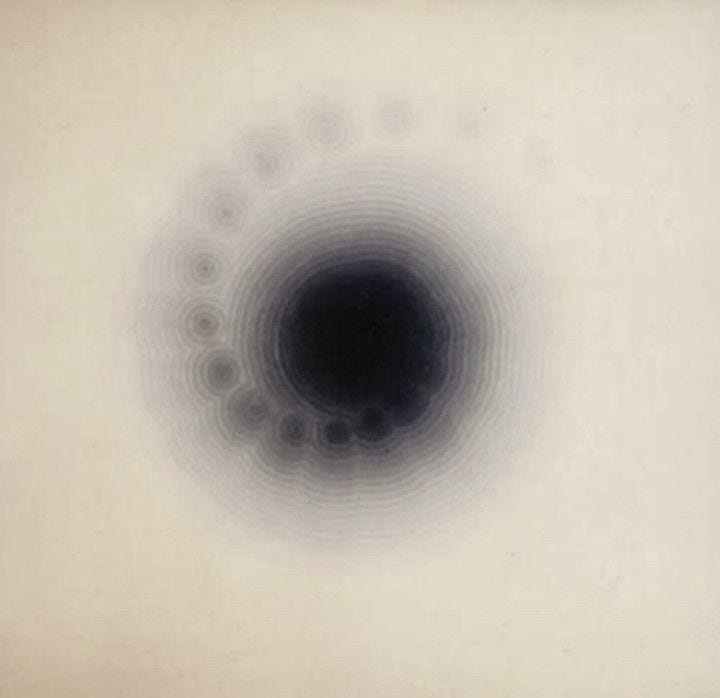
Years ago I was describing meaning of the name behind The Broad Place to one of my students, Danielle, a composer. I was trying to explain those moments of complete stillness and expansion that break through the noise of being human. The absolute wholeness of it. The clarity. And how I wanted to dedicate my work to showing people how to access more of it. She listened, and then sighed and said: “Oh yes. It is the same as music.”
She went on to explain that most people think music is primarily the notes and their sequencing. But music is also the gaps between the notes. The tiny pockets of silence and stillness. Without those gaps, you do not have music. You just have noise.
Her meditation practice was exactly this to her: gaps punctuating the noise and activity of her day. And surrounded by those little moments of stillness, the activity became more beautiful. More of a symphony.
I have never found a better description of what we are doing here.
We live in a world that has systematically removed the gaps. The space between the alarm going off and the phone being checked has shrunk to nothing. Meals happen while other things happen. The walk from the car to the office is no longer allowed to just be a walk. Exercise walks are filled with podcasts and audiobooks. Every moment of potential stillness is rushed to fill.
And we wonder why we are exhausted.
There is a Japanese concept called Yohaku, the blank space within a painting that surrounds and celebrates and enhances what is painted. Take Yohaku away and the painting loses something essential. The same is true for a life. When everything is scheduled too tightly, when there is no breath between activities, we feel it. Not just as tiredness, but as a kind of loss. The constant noise means the signal gets harder and harder to hear.
Cultivating space is not laziness. It is intelligence. Sitting with your breath between meetings. Starting the morning without technology before the day’s noise begins. Moving away from your desk not to be productive, but simply to exist for a few minutes. These are not luxuries. They are maintenance.
The music requires the gaps. And so do you.
With love,
Jac x
Practice: The Yohaku Day
Look at your schedule today and find three places where you can introduce a small gap. Even two minutes of genuine stillness, no phone, no task, no input. Sit. Breathe. Look out the window. Let the mind wander without following it. At the end of the day, notice whether those gaps changed anything about your sense of presence. Were you more available to the people around you? Did the afternoon feel different from the morning? Begin to understand what the gaps do for you, and start protecting them.
If you are feeling like your whole life needs more space, more clarity, more room to breathe, the Getting Out Of A Rut Course is a structured and practical way to identify what is keeping you contracted and how to begin moving again. Find out more here.
I apologize, as this is a long comment, but it is something that your Future Appreciation Foundations course has really been helpful for me. I recently had to answer two prompts that were asking what received my undivided attention that day (activity where I was fully present, mind and body) and where was I checked out (body going through motions, mind elsewhere)? At first I filled out all the main activities from that day and looking at them, I was mindful and present for many of them, and for a few, my mind did wonder, but I kept returning to the moment. I was actually very pleased with myself and gave myself a pat on the back. Then the next morning, I returned to my journal and thought about the previous day again.
And I realized that everything I had listed added up to maybe 8 hours of my day, and that had been a good day, filled with a lot of what I would consider “meaningful” activities, important ones, but I wondered what about the rest, the in-betweens? Waiting for my appointment? How did I get from the beach back home? How did I move from the bedroom downstairs to breakfast? What was I thinking while doing the dishes? I knew I did dishes but I couldn’t remember the act itself, only that I had them done, so I knew my mind must have been elsewhere. Getting dressed, brushing my teeth, preparing dinner… Was I listening to music or an audiobook? Was I thinking about something? I couldn’t actually really remember.
I realized that the place where I check out most is in the (what I consider mundane) gaps between the activities that I deem “important”. I check out when I am waiting between activities, like lunch and having to go pick up my daughter from school, physically changing places, when I am putting things away. I check out when I do ordinary, daily things. I let my body take over, but my mind is on an audiobook, music, a video in the background, or simply elsewhere, planning for the future.
And I have been taking your course on the Future appreciation foundations and I realized I move a lot between the calm, creative flow state and the red, hyperaroused state, and the trend seems to be mostly when I let my mind be elsewhere when I am in those gaps. It was so obvious looking at the chart! So now I am trying to be more mindful of the gaps. To let them just be spacious and noiseless, without trying to fill them just because I can. It is making a difference, as I am noticing the graph is not so up and down as it was on week 1. But it is extremely difficult. I am an overthinker and a hypochondriac, and in those gaps, my mind really tries to go in all sorts of directions, and wants to fill the silence.
I love this - thanks for the reminder